
"Coffea genus"
300 article(s) found

On the Origin, Culture and Communication of the History of Coffee
Coffee tree, is a tropical plant, is an evergreen shrub, growing in the equator, latitude 25 degrees north and south, that is, within the Tropic of Cancer. The Tropic of Cancer and near the equator are the world coffee growing belts. The growth conditions require abundant rainfall and humid climate. The suitable altitude is about 600 to 1500 meters, and the annual rainfall is 1500 to 2000 millimeters. Mild days alternate with cool nights.

The three primary species of coffee are Arabica coffee, Robsta coffee, Liberian coffee.
Professional coffee knowledge exchange more information about coffee beans Please follow the coffee workshop (Wechat official account cafe_style) native species are plant types that develop naturally in the wild without human intervention. Coffee native species means coffee trees that are native to ancient countries such as Ethiopia without hybridization. There are three kinds of coffee that are edible.

Variety Information and Flavor description of Iron pickup Coffee Bean
For the exchange of professional baristas, please follow the coffee workshop (Wechat official account cafe_style) [Typica] Tibica species closest to the original species. The bean shape is slightly longer, like an elongated egg, known as Arabigo or criollo in Central America. It has a clean citric acid taste, sweet aftertaste, low resistance to leaf rust, not easy to take care of, low seed setting of trees, and long harvest period.
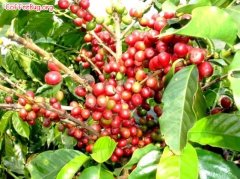
The basic knowledge of coffee beans The three original species of coffee
Coffee belongs to the evergreen shrubs of the genus Coffee of Rubiaceae, centered in tropical regions, with about 500 genera and 6000 species of Rubiaceae plants distributed here. Coffee has long been thought to have certain medicinal effects, such as invigorating stomach, refreshing mind, stopping bleeding, dissipating heat, strengthening body, etc. More famous Rubiaceae plants and gardenia, its fruit has long been dried as medicine
Coffee grows on trees.
As I often say, Nestle Coffee makes a lot of people know about coffee and the taste of coffee, but people's understanding of coffee is only on Nestle Coffee (instant coffee).

Growth Environment and brewing of small Coffee
Small grain coffee scientific name: Coffea arabica family genus: Rubiaceae coffee genus morphological characteristics: small trees or large shrubs, plant height 5 meters 8 meters. Base usually much branched, old branches gray-white. Nodes inflated, young branches glabrous. Leaves thinly leathery-ovate-lanceolate or lanceolate, apex long acuminate, base cuneate or slightly obtuse, entire or shallowly wavy, both surfaces glabrous. Cymes several clustered in leaf axils

Basic knowledge of boutique coffee knowledge of growing coffee
Raw coffee beans are the seeds of Rubiaceae, and there are at least 66 species in the genus Coffea. Two of the commercial interests are Arabica (Coffea arabica) and Congolese coffee (C. canephora). The former accounts for 2/3 of the world's production, while the latter, also known as Robusta, accounts for the remaining 1/3. Robastaga
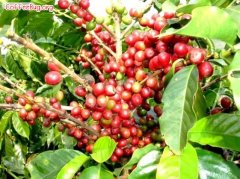
The basics of coffee beans the three native species of coffee
Coffee belongs to the evergreen shrub of the genus Rubiaceae, which is centered in the tropics. There are about 6000 species of Rubiaceae belonging to 500 genera. Coffee has always been thought to have certain effects, such as strengthening the stomach, waking up the brain, stopping bleeding, dissipating heat, strengthening the body, and so on. The more famous Rubiaceae plant is Gardenia jasminoides, whose fruit was dried and used as medicinal material a long time ago. The three native species of coffee

The basic knowledge of Coffee beans Coffee beans are the three native species of coffee
Coffee belongs to the evergreen shrub of the genus Rubiaceae, which is centered in the tropics. There are about 6000 species of Rubiaceae belonging to 500 genera. Coffee has always been thought to have certain effects, such as strengthening the stomach, waking up the brain, stopping bleeding, dissipating heat, strengthening the body, and so on. The more famous Rubiaceae plant is Gardenia jasminoides, whose fruit was dried and used as medicinal material a long time ago. The three native species of coffee

What kind of coffee beans does Arabica coffee refer to? how to tell how many Arabica coffee beans are?
Professional coffee knowledge exchange more coffee bean information please follow the coffee workshop (Wechat official account cafe_style) "coffee variety" this kind of information is not easy to be noticed by coffee users in the early days, often engaged in roasters or players will be slightly concerned about, but will not be too in-depth, persistent, because the former is concerned about the price and sales channels; the latter focuses on the focus

Bourbon Coffee Bean Flavor Description Type Tasting History Variety Characteristics
Professional barista exchanges, please pay attention to coffee workshop (Weixin Official Accounts cafe_style ) The coffee we usually drink, whether from Coffea arabica, Coffea canephora (commonly known as Robasta species [Note 2]), or the rare Liberian species (Coffea liberica), in botany, are all members of the genus Coffea, family of Penniaceae
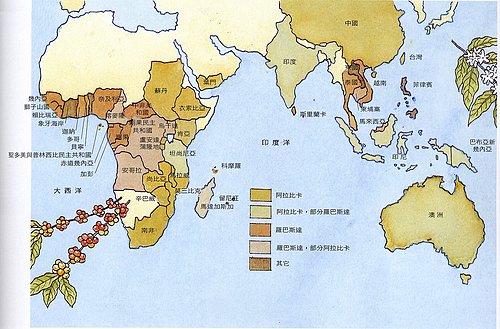
The basic knowledge of Coffee beans the three native species of coffee Robsta species Arabica species Libby
Basic knowledge of coffee beans (1) Coffee belongs to the evergreen shrub of the genus Rubiaceae, which is centered in the tropics. There are about 6000 species of Rubiaceae belonging to 500 genera. Coffee has always been thought to have certain effects, such as strengthening the stomach, waking up the brain, stopping bleeding, dissipating heat, strengthening the body, and so on. The more famous Rubiaceae plant is Gardenia jasminoides, whose fruit was dried and used as medicine a long time ago.

Introduction to the varieties of boutique coffee beans what are the ancient native species?
In plant taxonomy, coffee belongs to the Genus Coffea family of Rubiaceae, and there are at least a hundred varieties of coffee under it. In the healthy Life post "falling in love with boutique coffee", I mentioned that the more common coffees are Arabica (Arabica, elegant flavor, is the main boutique coffee) and Robusta (or sturdy beans, rough flavor, caffeine content
Yunnan coffee Yunnan small grain coffee Yunnan boutique coffee
Yunnan small-grain coffee in China is a beverage crop with high economic value, which is called the three largest beverages in the world together with cocoa and tea, and its output and consumption ranks first among the three beverages. Coffee is rich in protein, fat, sucrose, starch, glucose, caffeine and other substances, rich aroma and delicious taste. Coffee is a perennial evergreen shrub of the genus Coffee of Rubiaceae or Xiao Qiao.

Do you know? The distinction between Arabica coffee and Robusta can not be seen solely in terms of bean midline and bean shape.
Professional coffee knowledge exchange more coffee bean information please follow the coffee workshop (Wechat official account cafe_style) coffee beans are the seeds of plants belonging to the Rubiaceae Family family, under the coffee (Coffea Genus) there are at least 25 major varieties, of which the two most important are the Arabica species Coffea arabica (Arabica coffee)

Is Katim the truth hidden by Arabica or Robusta Katim and Arabica?
Professional coffee knowledge exchange more coffee bean information please follow the coffee workshop (Wechat official account cafe_style) Qianjie-Yunnan Coffee introduction Coffee Tree is a flowering plant of the coffee genus Rubiaceae, with a figure ranging from small shrubs to 18-meter-tall trees. Wild coffee species grow irregularly in the tropics, and new species are still being discovered.

Coffee theory study: coffee plant classification, cultivation and processing
Many people are familiar with coffee powder, but coffee powder is formed after coffee beans are ground. The coffee beans that ordinary customers get are fried (roasted) coffee beans, while coffee beans that have not been roasted are green coffee beans. If you dig deeper, coffee beans come from coffee berries on coffee trees, which are the seeds of coffee trees. So to understand coffee beans, first you have to understand coffee.
Coffee grows on trees.
As I often say, Nestle Coffee makes a lot of people know about coffee and the taste of coffee, but people's understanding of coffee is only on Nestle Coffee (instant coffee). So much so that in the Chinese mind, (Nestle) instant coffee has become a standard, and people may even comment on some freshly made coffee that this coffee is not good, there is no sparrow.

The Flavor and Taste of Yunnan small Coffee the manor area introduces Yunnan coffee beans.
Coffee is a kind of beverage crop with high economic value, which is called the three largest beverages in the world together with cocoa and tea, and its output and consumption ranks first among the three beverages. Coffee is rich in protein, fat, sucrose, starch, glucose, caffeine and other substances, rich aroma and delicious taste. Coffee is a perennial evergreen shrub or small tree of the genus Coffea of Rubiaceae.

Tieka Coffee Flavor description Variety planting Development Historical Story introduction of Variety allusions in producing areas
Communication of professional baristas Please pay attention to the coffee varieties in the coffee workshop (Wechat official account cafe_style) this kind of information is not easy to be noticed by coffee users in the early days, and it is often the roasters or players who are slightly concerned about it, but not too deep and persistent, because the former is concerned with price and sales channels, while the latter focuses on the improvement of roasting skills. Will